While modern lucid dreaming focuses on reality checks and sleep masks, Tibetan masters have preserved a 900-year-old systematic approach that transforms sleep into spiritual awakening. This isn’t just about controlling your dreams—it’s about recognizing the fundamental nature of reality itself.
“All phenomena are like a dream, an illusion, a bubble, a shadow. Like dew and like lightning—regard them thus."
— The Diamond Sutra, foundational text for dream yoga practice
Gampopa (1079-1153), the heart disciple of the legendary yogi Milarepa, systematized the profound dream yoga teachings that had been transmitted through an unbroken chain: from the Indian master Naropa to the translator Marpa, to the ascetic Milarepa, and finally to the scholar-practitioner Gampopa. What emerged was a clear, sequential method that anyone can follow—no monastery required.

Unlike contemporary lucid dreaming techniques that focus primarily on mental tricks and technology, Gampopa’s approach works with your body’s subtle energy system, specifically activating the throat chakra to bridge waking consciousness into the dream state. The method progresses through four distinct stages, each building upon the last, taking you from basic dream recognition to the ultimate realization of consciousness itself.
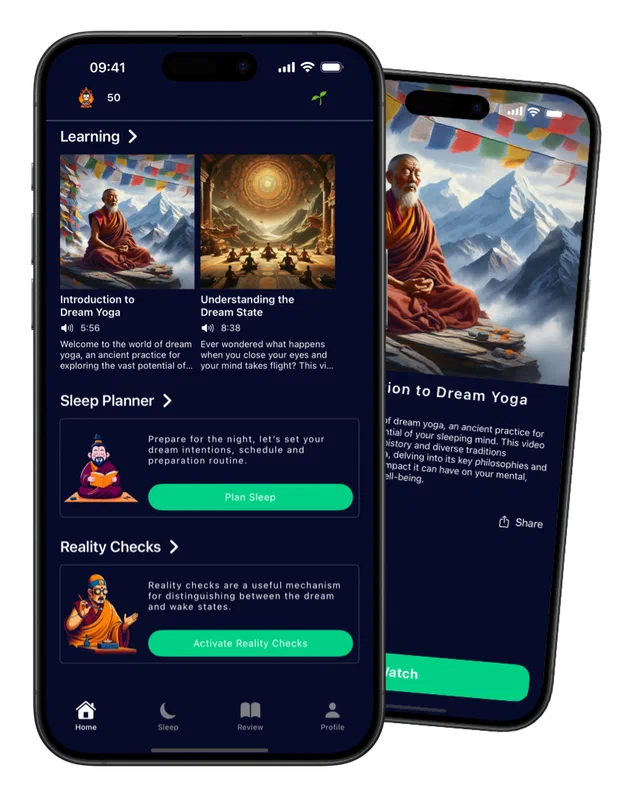
In this comprehensive guide, you’ll learn the exact techniques Gampopa taught—the throat chakra visualization that serves as the foundation, and the complete four-stage progression that transforms sleep from unconscious downtime into a profound spiritual practice. The Mindful Slumber app brings these ancient methods into actionable, personalized practice, adapting to your progress and providing the guidance traditionally reserved for in-person instruction.
Understanding the Kagyu Dream Yoga Lineage
Historical Context

Gampopa’s role in Tibetan Buddhism cannot be overstated. After receiving the complete transmission from Milarepa, he synthesized the esoteric “Six Yogas of Naropa” with the gradual path teachings, creating accessible frameworks that preserved profound practices while making them teachable. His major works, “The Jewel Ornament of Liberation” and “The Precious Garland of the Supreme Path,” remain foundational texts in the Kagyu tradition.
“In the dream state, practice transforming yourself into animals, birds, gods, or any other form. Make yourself huge as a mountain or tiny as a mustard seed. One becomes many; many become one."
— Traditional instructions on the Six Yogas of Naropa
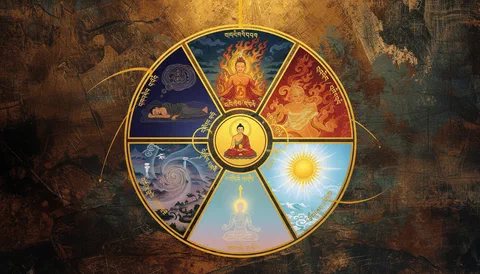
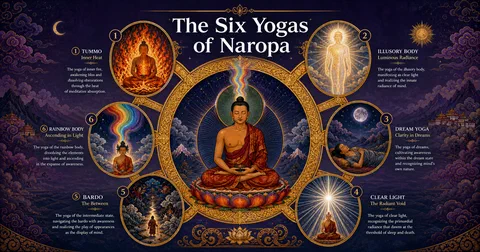
Dream yoga represents one of the Six Yogas of Naropa, alongside practices like inner heat (tummo) and consciousness transference (phowa). What makes Gampopa’s presentation unique is his systematic breakdown of what earlier texts presented as a unified whole. He identified that practitioners needed clear stages with measurable milestones—a recognition that modern learning science confirms.

Within Tibetan Buddhism, there are both sutra and tantra approaches to dream practice. The sutra approach emphasizes understanding the dream-like nature of all phenomena through contemplation and logic. The tantra approach—which Gampopa taught—works directly with the body’s energy channels, winds, and drops to create actual experiences of mind’s nature. This is why the physical practice of throat chakra visualization is essential, not optional.
The Philosophical Foundation
The core insight driving dream yoga is radical: your waking life is just as dreamlike as your sleeping dreams. Both are projections of mind, lacking inherent existence, yet appearing vividly real while you’re experiencing them. The difference is that most people never question their waking reality, while everyone knows dreams aren’t “real” once they wake up.
“If one can maintain awareness during dreams, one will recognize the dreamlike nature of all waking experience. And when the dreamlike nature of existence is fully understood, the deluded mind of ignorance ceases.”
— Taranatha’s commentary on the Six Yogas of Naropa
Dream yoga inverts this. By learning to recognize dreams while dreaming, you develop the capacity to recognize waking life’s dreamlike nature while awake. This isn’t philosophical speculation—it’s direct experience cultivated through practice.
But there’s another crucial dimension: training for death. The bardo—the intermediate state between death and rebirth—has striking similarities to the dream state. Both involve consciousness operating without a physical body’s anchor. Both present appearances that seem real but are actually mental projections. By mastering the dream state, you’re literally training for death, developing the capacity to maintain awareness through the dissolution process and navigate the bardo consciously.

This is why Gampopa emphasized that dream yoga isn’t entertainment or self-improvement in the conventional sense. It’s preparation for life’s most crucial transition.
Why the Throat Chakra?

The Tibetan subtle body system maps networks of energy channels (nadis) through which life force (prana) flows. At key junctures along the central channel sit chakras—wheels of energy that govern different functions. While you may be familiar with the seven-chakra system popularized in the West, Tibetan Buddhism primarily works with five major chakras, each associated with specific states of consciousness.
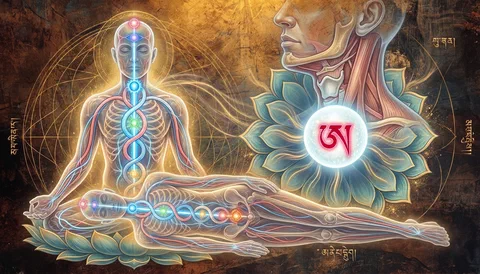
The throat chakra (vishuddha) is specifically connected to speech, communication, and—critically for our purposes—the dream state. According to Tibetan physiology, when you fall asleep, the prana winds that normally circulate throughout your body gather and dissolve into the central channel at specific points. The throat chakra is where the winds collect during the dream phase of sleep.
By learning to consciously focus on the throat chakra as you fall asleep, you’re essentially placing your awareness exactly where the natural dream-generating process occurs. You’re meeting your dreams at their source. This is why the throat chakra visualization isn’t just a focusing exercise—it’s a precise intervention into your body’s energetic process of dream creation.
Key Tibetan Terms in Gampopa’s Dream Yoga:
- རྨི་ལམ (mi-lam): Dream
- སྒྱུ་མ (sgyu-ma): Illusion, apparition
- ཐིག་ལེ (thigle): Bindu, luminous drop
- རྩ (rtsa): Energy channel, nadi
- རླུང (rlung): Prana, wind energy
- འོད་གསལ (‘od-gsal): Clear light
“Place your awareness at the throat center where the red syllable AH rests within the white drop. This is the palace where dreams are born. Resting there with continuous mindfulness, you will catch the dream at its arising.”
— From Gampopa’s oral instructions, recorded by his disciples
The Mindful Slumber app includes precise guided visualizations for the throat chakra practice, with adaptive timing that adjusts to your natural sleep onset patterns. Rather than guessing when to begin or how long to hold the visualization, the app’s personalized meditation sequences integrate this practice seamlessly into your pre-sleep routine.
The Throat Chakra Visualization: Foundation of Dream Control
Before exploring the four stages of mastery, you need to establish the foundational practice that makes everything else possible. The throat chakra visualization is performed every night as you prepare for sleep. Initially, it may feel awkward or effortful, but within weeks it becomes as natural as closing your eyes.
Anatomical Understanding
The throat chakra is located at the base of your throat, approximately at the level of your thyroid gland. In Tibetan iconography, it’s depicted as a lotus with sixteen petals, but for practical purposes, you’ll visualize something simpler and more vivid.
The core visualization consists of two elements:
- A red AH syllable (ཨ)—the first letter of the Tibetan alphabet, representing pure unborn awareness
- A luminous white drop (thigle or bindu) containing the syllable

Traditional texts specify that this visualization should be roughly “the size of a pea”—small enough to require focused concentration, but not so small that you strain to perceive it. The red syllable glows with its own luminosity, like a ruby lit from within, surrounded by the white sphere that has a pearl-like quality.
“The size of a pea or small berry—not so large that it becomes dull, not so small that it creates strain. The middle way in all things.”
— Traditional Kagyu instruction on the thigle visualization
Why these specific elements? The AH syllable carries symbolic weight in Vajrayana Buddhism as the sound of primordial purity, but practically speaking, having a specific visual object prevents your mind from wandering into discursive thought. The red color has a warming, energizing quality that helps maintain alertness as you drift toward sleep. The white bindu represents the drop of subtle essence where consciousness resides during the dream state.
Pre-Sleep Preparation Sequence
Body Position

Lie on your right side in what’s called the “lion’s posture”—the same position the Buddha assumed when he passed into parinirvana. Your right hand should rest under your right cheek, palm open. Your left arm rests along your left side. Legs are slightly bent, with the left leg resting on the right.
Why this specific position? From the perspective of Tibetan medicine and yogic anatomy, lying on your right side closes or reduces flow through the right nostril (pingala nadi—the solar channel) while opening the left nostril (ida nadi—the lunar channel). The lunar channel is associated with cooling, calming energy and the dream state. By encouraging left nostril breathing, you’re physiologically preparing your body for the dream phase of sleep.
Western sleep science has independently confirmed that sleep position affects sleep quality and dreaming, though the mechanisms described differ. What matters is that this position has been empirically validated through centuries of practice.
Preliminary Breathing
Before beginning the visualization, perform seven to twenty-one cleansing breaths. Breathe naturally through your nose, but on each exhalation, mentally release all the day’s accumulated tension, thoughts, and concerns. Imagine each exhalation carrying away mental and emotional residue like smoke dissipating into space.
This isn’t merely relaxation—you’re creating a clear mental space. Dream yoga requires alert awareness, not drowsy dullness. The cleansing breaths calm the mind without inducing grogginess.
Tongue and Eye Position
Rest your tongue gently against your upper palate, just behind your front teeth. This connects two important energy channels and helps prevent excessive salivation during the practice.
Your eyes should be closed, but maintain a very slight upward gaze—as if you were looking toward the point between your eyebrows, but with closed, relaxed lids. This helps maintain alertness and naturally directs awareness toward the throat chakra location.
The Mindful Slumber app guides you through this entire preparation sequence with adaptive audio cues, ensuring you establish the proper physical foundation before beginning the core visualization. The app tracks your preferred duration for preparation and adjusts accordingly over time.
The Core Visualization Technique
Once your body is properly positioned and your mind cleared through the breathing exercise, bring your attention to your throat area. Don’t think about your physical throat—shift your awareness to the energetic dimension, the space where the throat chakra resides.
Step 1: Establish the location
Simply rest your awareness at the throat for several breaths. You might feel warmth, tingling, or nothing at all. Any sensation is fine—you’re just establishing the focal point.
Step 2: Visualize the white bindu
See a sphere of luminous white light, about the size of a small pearl, hovering in the center of your throat chakra. This sphere glows softly with its own radiance. It’s not solid like a physical object, but more like a sphere of light suspended in space. Take your time establishing this clearly.
Step 3: Place the red AH syllable within
Inside the white sphere, see the red Tibetan letter AH (ཨ). If you’re unfamiliar with Tibetan script, you can visualize a simple red letter “A” or even just a red point of light. The traditional AH syllable looks somewhat like an ornate number 6 with additional flourishes. The Mindful Slumber app provides visual references you can study during the day, making the nighttime visualization easier.
The red syllable glows brilliantly, like a ruby catching sunlight. Its radiance fills the white bindu from within.
Step 4: Maintain single-pointed focus
Hold this complete visualization—white sphere containing the glowing red syllable at your throat—as you drift toward sleep. Your attention should rest gently but consistently on this image.
What to do when your mind wanders:
Your mind will wander. This is absolutely guaranteed, especially in the beginning. Thoughts about tomorrow, memories from today, body sensations, sounds in your environment—all will pull your attention away from the visualization.
Each time you notice you’ve lost the image, simply return to it without judgment or frustration. The act of noticing you’ve wandered and returning—done hundreds of times—is actually training your awareness. This is the same meta-awareness you’ll need to recognize you’re dreaming.
Some nights, you’ll maintain the visualization clearly until sleep onset. Other nights, you’ll return to it dozens of times. Both are productive practice.
Traditional duration:
Maintain this visualization until you fall asleep. In the beginning, this might happen quickly because the effort tires your mind. Eventually, you’ll be able to hold the visualization for 20-30 minutes while remaining alert and relaxed, drifting into sleep gradually while maintaining awareness.
The Mindful Slumber app provides timed guided sessions for the throat chakra visualization, starting with shorter durations (10-15 minutes) and progressively extending as your capacity develops. The adaptive meditation feature monitors your engagement patterns and adjusts the guidance intensity—more frequent reminders when you’re beginning, more space for independent practice as you progress.
Energetic Mechanisms: How This Actually Works
Understanding the mechanics helps strengthen your practice, even if you don’t fully believe the traditional model. According to Tibetan yogic anatomy, your body contains 72,000 energy channels, but three primary ones matter most:
- The central channel (avadhuti) runs from the crown of your head to the base of your spine
- The right channel (rasana/pingala) and left channel (kyangma/ida) run parallel, crossing the central channel at each chakra
Most of the time, your prana winds flow through the right and left channels, which are associated with conceptual thinking, dualistic perception, and ordinary waking consciousness. The central channel, by contrast, is associated with non-dual awareness and pristine consciousness.
During deep sleep and at death, the prana winds naturally dissolve into the central channel, which is why everyone experiences a moment of clear light during both states—though most people don’t recognize it because they lack training.
Dream yoga’s purpose is to train you to maintain awareness as the winds dissolve into the central channel during sleep. The throat chakra visualization serves as an anchor point, keeping consciousness alert right at the location where dream-state prana activity concentrates.
By focusing on the throat chakra, you’re essentially positioning your awareness at the junction box where waking consciousness transitions to dreaming consciousness. When the shift happens, you’re already there, watching it occur.
Whether you understand this in terms of chakras and prana or in terms of neuroscience and sleep architecture is less important than doing the practice consistently. The technique works regardless of your belief system, as thousands of practitioners across centuries have discovered.
Gampopa’s Four Sequential Stages of Dream Yoga Mastery
The genius of Gampopa’s systematization is that he identified four distinct stages of dream yoga, each with clear markers of success. You don’t move to the next stage until you’ve stabilized the current one. This prevents the common mistake of attempting advanced practices before establishing the foundation—a mistake that leads to frustration and abandonment of the practice.
The Mindful Slumber app structures its meditation sequences around these four stages, automatically progressing you through the curriculum based on your practice consistency and subjective reports. Each stage includes stage-specific guided meditations, teaching modules, and progress tracking to ensure you’re building genuine capacity rather than just accumulating knowledge.
Stage 1: Recognizing the Dream State (Dream Lucidity)
Traditional Tibetan name: རྨི་ལམ་ངོ་ཤེས་པ (mi-lam ngo-shes-pa) — “recognizing the dream”
This first stage has a single objective: recognize that you’re dreaming while you’re still in the dream. This is the foundation upon which everything else builds. Without the ability to become lucid in dreams, the subsequent stages are impossible.
Daytime Practice Requirements
Dream yoga doesn’t begin when you fall asleep—it begins the moment you wake up. Gampopa emphasized that daytime practice directly determines nighttime success. Your waking mind and your dreaming mind aren’t separate entities; they’re the same consciousness operating in different states.
The core daytime practice: Throughout your waking hours, repeatedly remind yourself that all experiences are dreamlike. This isn’t mere affirmation or positive thinking—it’s a contemplative practice designed to weaken your assumption that reality is solid and fixed.
Traditional texts recommend doing this at least 21 times per day. Practically, this means:
- Every time you pass through a doorway: “This is dreamlike”
- Every time you eat or drink: “This appearance is no more solid than a dream”
- During transitions (starting your car, opening your computer, etc.): Pause and recognize the dreamlike quality
- When strong emotions arise: “Even this emotion is a dream appearance”
The Mindful Slumber app includes customizable daytime reminder notifications that prompt these contemplations at optimal intervals throughout your day. Rather than generic “reality check” prompts, these reminders integrate the philosophical framework of Tibetan dream yoga, asking questions like “What’s the difference between this experience and a vivid dream?” or “If this were a dream, what would you transform?”
Specific contemplations from Gampopa’s texts:
Impermanence contemplation: Notice how every experience arises and immediately passes. Your thoughts, emotions, sensations—all appearing and dissolving like images in a dream. Dreams and waking share this quality of constant flux.
Lack of solidity: Look at any object and recognize that its apparent solidity is actually empty space—atoms and space, or in Buddhist terms, emptiness appearing as form. Dreams are the same: vividly appearing yet lacking substance.
Mind-created quality: All your experience happens in your mind. The cup you’re holding generates signals interpreted by your brain. You experience your brain’s interpretation, not the “thing in itself.” This is equally true of dream objects and waking objects—both are mental appearances.
The point isn’t to convince yourself intellectually but to loosen the habitual conviction that waking reality is fundamentally different from dreaming. This loosening creates cracks in which lucidity can emerge.
Connection to illusory body practice:
In the complete Six Yogas system, dream yoga is paired with “illusory body” practice. Throughout the day, you practice seeing your body as an illusion—present and functional but lacking inherent existence. You might visualize your body as a rainbow, transparent and luminous, or as a deity form if you practice Vajrayana visualization.
This practice serves dream yoga by reducing your identification with the physical body. In dreams, you typically have a dream body that feels entirely real. By recognizing your waking body’s illusory nature, you become more likely to question your dream body’s reality, triggering lucidity.
The Mindful Slumber app’s Stage 1 curriculum includes guided illusory body meditations you can practice during the day, integrated with the dreamlike reality contemplations to create a comprehensive daytime training program.
Nighttime Techniques
The throat chakra visualization described earlier is your primary nighttime technique for Stage 1. Every night, without exception, you:
- Assume the proper sleep position
- Perform cleansing breaths
- Visualize the white bindu and red AH at your throat
- Maintain this focus as you fall asleep
Additional nighttime element: Intention setting
Before beginning the visualization, clearly form the intention: “Tonight I will recognize I am dreaming.” Not as a wish or hope, but as a clear resolution. Some traditions have you repeat this 21 times. At minimum, form this intention strongly 3-7 times before starting the visualization.
This intention-setting isn’t magical thinking—it’s working with the proven psychological principle that pre-sleep cognition influences dream content. Studies on lucid dreaming consistently show that intention and expectation predict lucidity frequency. You’re programming your subconscious to prioritize the recognition task.
First signs of success
Initial lucidity experiences are usually fragmented and brief. You might:
- Suddenly realize you’re dreaming, experience a moment of clarity and excitement, then immediately wake up
- Achieve partial lucidity where you suspect you’re dreaming but aren’t certain
- Remember more dreams more vividly (this indicates rising awareness even without full lucidity)
- Experience “false awakenings” where you dream you’ve woken up (a sign you’re getting close)
Don’t judge these early experiences as failures. Each represents progress. The Mindful Slumber app includes a sophisticated dream journal feature where you record these experiences, and the app’s pattern recognition helps you identify your personal dream signs—recurring elements that can serve as lucidity triggers.
Troubleshooting Stage 1
“I’m trying too hard and can’t fall asleep”
Excessive effort creates tension that prevents sleep. The throat chakra visualization should be held with alert relaxation—gentle focus, not intense concentration. If you’re still awake after 30-40 minutes of visualization, you’re likely too tense.
Solution: Lighten your touch. Imagine the visualization is effortlessly present rather than something you’re forcing. Some nights, simply knowing you’ll do the practice is enough—your unconscious takes over once you’ve established the habit.
The Mindful Slumber app’s adaptive meditations include relaxation cues calibrated to your stress level, ensuring you find the optimal balance between alertness and ease.
“I put in minimal effort and just fall asleep unconsciously”
The opposite problem: you’re too relaxed, falling into ordinary sleep without maintaining any awareness through the transition.
Solution: Increase engagement slightly. Refresh the visualization more frequently. Pair it with subtle body awareness—feeling the breath at your nostrils or the energy at your throat. Make the red AH more brilliant and vivid. You want to ride the edge between sleep and waking as long as possible.
Gampopa’s “middle way” approach
Like all Buddhist practice, dream yoga requires the middle way between excessive striving and insufficient effort. Gampopa taught that you should practice with “relaxed diligence”—consistent and committed, but not grim or forced.
If you’re not seeing any results after consistent practice (nightly visualization plus daytime contemplations) for 4-6 weeks, you likely need to adjust your approach. The most common issues are:
- Inconsistent practice (skipping nights or daytime contemplations)
- Insufficient sleep (dream yoga requires adequate sleep time)
- High stress or poor sleep hygiene undermining the practice
- Substance use (alcohol, cannabis, certain medications) that suppress REM sleep
The Mindful Slumber app tracks your practice consistency and sleep patterns, providing feedback when these common obstacles are detected. The app’s adaptive system adjusts your program based on these factors rather than pushing you toward practices your current lifestyle can’t support.
Success indicators for Stage 1:
- Achieving lucidity at least 2-3 times per month
- Remembering 3-5 dreams per night
- Increased vividness and clarity in dream recall
- Brief moments of awareness during the sleep transition
- Growing sense that waking and dreaming are fundamentally similar
Once you’ve maintained consistent lucidity—recognizing you’re dreaming at least a few times per month for 2-3 months—you’re ready to begin incorporating Stage 2 practices. Note that you don’t abandon Stage 1; you continue it while adding Stage 2 techniques.
Stage 2: Transforming Dream Content (Dream Control)
Traditional Tibetan name: རྨི་ལམ་སྒྱུར་བ (mi-lam sgyur-wa) — “transforming the dream”
Once you can reliably recognize you’re dreaming, Stage 2 teaches you to actively transform dream content. This isn’t mere entertainment (though it can certainly be enjoyable). The ability to manipulate dream appearances serves several crucial purposes:
- Stabilizes lucidity: Actively engaging with the dream keeps you lucid longer
- Overcomes fear: Transforming nightmares demonstrates the mind-created nature of all appearances
- Prepares for Stage 3: By experimenting with transformation, you directly experience how malleable reality is
- Develops concentration: Successfully changing dream content requires focused intention
Prerequisites from Stage 1
Don’t rush into transformation practices. Gampopa emphasized that attempting advanced techniques prematurely leads to frustration. You should have:
- Consistent lucidity (at least 2-3 times per week)
- Ability to maintain lucidity for at least 30 seconds before waking
- Regular dream recall and journaling practice
- Stable throat chakra visualization practice
The Mindful Slumber app monitors your Stage 1 progress through your dream journal entries and self-assessments, only introducing Stage 2 content when you’ve demonstrated readiness. This prevents the common mistake of jumping ahead before establishing foundation skills.
Transformation practices (in sequence)
Gampopa taught these transformations in a specific order, from easier to more difficult. Master each before proceeding to the next.
1. Multiplication: Creating many from one object
When you’re lucid in a dream, select a simple object—a flower, a cup, anything distinct. Focus on it intently, then will it to multiply. Visualize two of the object, then four, then hundreds filling the dream space.
Why start here? Multiplication is the easiest transformation because you’re not changing the object’s nature, just its quantity. This builds your confidence and teaches you how intention manifests in the dream state.
Practice this until you can reliably multiply objects at will. This might take 5-10 lucid dreams.
2. Transformation: Changing objects into other forms
Once multiplication is stable, practice changing one object into another. Transform a flower into a bird, a table into water, fire into ice. Make the transformations as dramatic as possible.
This is significantly harder than multiplication. You’ll likely experience partial transformations at first—the flower might sprout wings but keep its petals, or the transformation might last only moments before reverting.
The key is clear, decisive intention. In the dream state, hesitation and doubt prevent manifestation. Form a crystal-clear image of the transformation, then decisively will it to occur.
Practice until you can reliably transform objects in at least 70-80% of your lucid dreams.
3. Size manipulation: Making things large and small
Take any object—ideally yourself—and change its size. Make yourself tiny as an ant, then vast as a mountain. Shrink the dream environment to a toy scale, then expand it to cosmic proportions.
Size transformation teaches you to manipulate your dream body and environment simultaneously. It’s also profoundly useful for navigating tight spaces in dreams or overcoming obstacles.
4. Travel: Moving to specific locations
Choose a destination before falling asleep—a real place you know, an imaginary landscape, or a “pure land” from Buddhist cosmology (Sukhavati, Tushita, etc.). When you become lucid, form the clear intention to travel there, then move toward it or will yourself to be there directly.
Traditional Tibetan practice emphasizes traveling to pure lands—enlightened realms associated with specific Buddhas. In Sukhavati (the pure land of Buddha Amitabha), for instance, you’d encounter Buddha Amitabha, receive teachings, and practice in an environment perfectly conducive to awakening.
Whether you conceptualize these as actual locations in some dimension of reality or as archetypes within your own mind is less important than the practice. Traveling to beautiful, peaceful, sacred environments trains your mind to manifest positive content and prepares you for navigating the bardo.
The Mindful Slumber app includes pre-sleep guided meditations for numerous destinations, from real-world locations to traditional Buddhist pure lands. These meditations help you establish clear mental images that you can then navigate toward in your lucid dreams.
5. Meeting teachers: Receiving teachings from wisdom beings
The most advanced Stage 2 practice is encountering teachers, guides, or enlightened beings in your lucid dreams and receiving teachings from them.
Before sleep, visualize a teacher—this could be a historical Buddhist master like Milarepa or Gampopa, an enlightened being like Tara or Chenrezig (Avalokiteshvara), your own meditation teacher, or even your “higher self” or “inner wisdom.”
When lucid, call out to this being, requesting their presence. When they appear, ask questions, request teachings, or simply sit in their presence.
The teachings you receive might be explicit verbal instructions or more subtle transmissions—feelings of insight, symbolic visions, or direct experiences of clarity. Record everything in your dream journal upon waking.
This practice bridges Stage 2 and Stage 3. Initially, you’re controlling the dream by manifesting the teacher. Eventually, you recognize that both the teacher and yourself are displays of the same awareness—empty yet appearing, separate yet unified.
Specific Gampopa instructions on transformation practice
Transform negative dreams first:
When nightmares or disturbing dreams arise, they present perfect opportunities. If you’re being chased by a monster, become lucid and transform it into a flower, or transform yourself into something vast and indestructible. If you’re falling, transform into a bird.
These transformations are particularly powerful because they directly address the fear response. Each time you successfully transform a threat, you weaken the habitual pattern of viewing appearances as inherently threatening. This isn’t just dream work—it reprograms your fundamental relationship with experience.
Use deity yoga visualizations within dreams:
If you have an established deity practice (visualizing yourself as a specific enlightened being), bring this into your lucid dreams. Transform your dream body into the deity form—Chenrezig with four arms, Green Tara seated on a lotus, or whichever deity you practice.
This serves multiple purposes: it stabilizes lucidity through focused visualization, it deepens your deity practice by bringing it into the dream dimension, and it trains you to identify with enlightened qualities rather than your ordinary self-concept.
The Mindful Slumber app offers guided deity visualization meditations as options within the Stage 2 curriculum, teaching you the traditional forms even if you don’t have separate deity practice training.
Why certain transformations before others:
The sequence Gampopa outlined moves from gross to subtle, from easier to more difficult. Each success builds the confidence and skill needed for the next level. Attempting to meet enlightened beings before you can multiply objects would be like trying to run before you can walk.
Additionally, the sequence trains progressively deeper levels of the mind. Multiplying objects works with surface-level dream content. Traveling to pure lands requires restructuring the entire dream environment. Meeting teachers engages the deepest levels of symbolic, archetypal mind.
The role of intention (aspiration prayer before sleep):
Every night before beginning your throat chakra visualization, set a clear intention for what you’ll practice when you become lucid. “Tonight when I recognize I’m dreaming, I will practice multiplication” or “Tonight I will travel to Sukhavati and meet Buddha Amitabha.”
This pre-sleep programming dramatically increases your likelihood of remembering to do the practice once you’re lucid. Without this intention-setting, you’ll often become lucid and then simply wander the dream aimlessly or get caught up in the dream narrative.
The Mindful Slumber app includes customizable intention-setting protocols in the pre-sleep meditation sequence, guiding you to form clear, specific objectives for your lucid dreams based on which Stage 2 practice you’re working on.
Advanced Stage 2 practices
Offering dreams to the Three Jewels:
A uniquely Buddhist element of dream yoga is dedicating your dream practice to the benefit of all beings. Upon waking from a successful lucid dream, formally offer the merit: “By this practice, may all beings achieve liberation.”
This isn’t superstition—it’s training in bodhichitta (the awakened heart-mind). You’re conditioning yourself to orient all activities, even dreams, toward universal benefit rather than personal gain.
Practicing generosity in dreams:
When lucid, practice giving. Multiply food and distribute it to dream beings. Transform yourself into whatever others need. Create beautiful environments for the benefit of whoever appears.
This serves dual purposes: it’s excellent transformation practice (you’re constantly manipulating dream content), and it trains the mind in generosity, undermining the habitual clinging and selfishness that ordinarily govern our actions.
Meditating on emptiness within the dream:
This practice bridges into Stage 3. While lucid, stop trying to control or transform the dream. Instead, simply observe: Where did this dream come from? What is it made of? Where does it exist?
Examine a dream object closely. Try to find its edges, its substance, its reality. You’ll discover that the closer you look, the more it dissolves into mere appearance—vivid but empty, like a rainbow.
This investigation plants seeds for the emptiness realization that defines Stage 3.
Success indicators for Stage 2:
- Consistent ability to perform basic transformations (multiplication, simple changes) in 80%+ of lucid dreams
- Lucid dreams extending to 3-5 minutes or longer
- Decreased fear response to nightmares or disturbing content
- Successful travel to intended destinations at least occasionally
- Growing sense of playfulness and creative possibility in dreams
- Natural arising of positive qualities (generosity, compassion) in dream interactions
Once you’ve stabilized transformation abilities and can maintain extended lucid dreams, Stage 3 practices naturally begin to emerge. You’ll start noticing the emptiness underlying all the appearances you’re manipulating.
Stage 3: Realizing Dreams as Illusion (Dream Clarity)
Traditional Tibetan name: རྨི་ལམ་སྒྱུ་མར་ཤེས་པ (mi-lam sgyu-mar shes-pa) — “recognizing dreams as illusion”
Stage 3 represents a profound shift in perspective. You’re no longer trying to control dreams or make them interesting. Instead, you’re using the lucid dream state to directly realize the empty nature of all phenomena.
This is where dream yoga fulfills its ultimate purpose: not entertaining you with supernatural experiences, but revealing the fundamental nature of reality itself.
The philosophical shift
In Stages 1 and 2, you were still treating the dream as a thing—first recognizing it, then manipulating it. You were the subject, the dream was the object. Even while knowing it was a dream, you maintained the basic structure of self and other, inside and outside.
Stage 3 dissolves this structure. You begin to recognize that the dream and the dreamer arise together, neither existing independently. The dream isn’t “out there” being observed by a “you” in here. Both are displays of the same awareness, empty appearances in mind’s open space.
Understanding dreams and waking as equally illusory
The key insight: If you can recognize a dream as empty of inherent existence while dreaming, you can recognize waking reality the same way while awake. The two states aren’t fundamentally different—both are experiences appearing to consciousness, both are compounded phenomena arising from causes and conditions, both lack independent, permanent existence.
This isn’t nihilism. Appearances don’t stop appearing—dreams continue to manifest, waking life continues to unfold. But you’re no longer fooled by the appearances. You see through them to their actual nature: vivid yet empty, like rainbows, reflections, or images in a mirror.
Connection to Madhyamaka philosophy
This realization aligns with Madhyamaka (Middle Way) philosophy, particularly Nagarjuna’s teaching on the two truths:
- Conventional truth: Dreams appear, objects seem to exist, cause and effect operate. This level is valid and functional.
- Ultimate truth: All phenomena are empty of inherent existence, lacking independent reality.
Both truths are simultaneously valid. Dreams are empty AND they appear. Waking life is empty AND it functions. This isn’t a contradiction—it’s the fundamental nature of reality.
Stage 3 dream yoga gives you direct, non-conceptual experience of this teaching. Rather than just believing it intellectually, you know it through direct perception.
Meditation techniques within dreams
Analyzing the dream to find its source
When you become lucid, instead of immediately transforming content, pause and investigate: Where did this dream come from? Before this scene appeared, where was it? When I wake up, where will it go?
Look at a dream object and ask: Did I create this? Did it create itself? Did it come from somewhere else? Did it arise without cause?
You’ll find that none of these options accurately describes how the object arose. It seems to have appeared spontaneously, yet follows some logic of dream narrative. It seems to be your creation, yet you don’t experience yourself creating most dream content deliberately.
This analysis reveals that dream phenomena don’t arise according to our ordinary assumptions about causation and existence. They arise in a way that’s empty of inherent existence yet functionally present.
Recognizing the lack of inherent existence
Select any dream object and examine it closely. Try to find where it begins and ends. Try to locate its substance, its reality. Look for what makes it truly, inherently exist as the thing it appears to be.
You’ll discover it’s like trying to grab water—the closer you look, the less substantial it becomes. The dream object exists only as appearance, only as perception. It has no reality beyond your experience of it.
Now turn this investigation on yourself: Who is the one examining? Where is the dreamer? Try to locate the self that’s aware of the dream.
You’ll find the same thing: the dream self is also just appearance, just as empty as the dream objects. There’s awareness, there’s experience, but no solid, independent “you” having the experience.
Maintaining awareness of emptiness while dreaming
Once you’ve analyzed and recognized the emptiness of dream phenomena, rest in that recognition. Don’t try to maintain it with effort—simply allow the recognition to continue while the dream unfolds.
The dream continues to appear—objects, beings, landscapes—but now you see them as they are: empty appearances, like rainbows or reflections. Vivid, beautiful, functional, yet not possessing the solidity you previously attributed to them.
This is the meditation: resting in the recognition of emptiness while appearances continue to manifest. It’s the union of emptiness and appearance, clarity and emptiness, the inseparability of the two truths.
The practice of “looking at the mind looking”
A more advanced technique: Rather than examining dream objects, examine awareness itself. Who is aware? What is awareness? Where is it located?
Turn awareness back on itself. This is sometimes described as “looking at the looker” or “the eye trying to see itself.” You’re attempting to make consciousness itself the object of observation.
What you’ll discover is that consciousness can’t be objectified. There’s awareness, but it has no color, no shape, no location, no substance. It’s completely empty yet is the very basis for all experience.
This practice points directly to the nature of mind itself—luminous emptiness, the union of clarity and emptiness that is your fundamental nature.
Integration practices
Morning contemplation on the dream’s empty nature
Each morning after waking, before getting out of bed, review your dreams with this question: What happened to all those dream experiences? Where did they go?
All the apparent solidity, all the emotions, all the vividness—completely vanished, leaving no trace beyond memory. Recognize that your waking experiences will likewise dissolve, will likewise be discovered as empty when examined closely.
This morning contemplation extends the insight beyond the dream state, beginning to shift how you perceive waking reality.
Daytime practice: Seeing waking life with same recognition
Throughout the day, pause regularly to recognize the dreamlike quality of your experience. Not as an intellectual idea, but as direct perception.
Look at an object and see it the way you see dream objects in Stage 3—as vivid appearance empty of inherent existence. Notice an emotion arise and recognize it as you would a dream emotion—real as experience, empty in nature.
This is the crucial integration. The point of dream yoga isn’t to have special experiences while asleep. It’s to transform your understanding of all experience, both sleeping and waking.
The Mindful Slumber app provides contemplation prompts throughout the day specifically designed for Stage 3 practitioners, asking questions that point to emptiness: “This experience appearing right now—what is it made of?” “If this is a dream, what wakes up from it?”
The “dream-like meditation” throughout the day
Develop the habit of moving through waking life with the same awareness you’ve cultivated in lucid dreams. Maintain a background recognition that all appearances are dreamlike—vivid, functional, yet empty of inherent existence.
This isn’t spacing out or dissociating. You’re more present, more aware, because you’re not fooled by appearances. You engage fully with life while recognizing its fundamental nature.
Over time, this becomes effortless—a shift in perception rather than a practice you do.
Gampopa’s specific instructions for Stage 3
Why emotional reactions indicate lack of realization
In a dream, when you’re chased by a monster, fear arises automatically—but only if you’ve forgotten it’s a dream. The moment you recognize it’s a dream, the fear dissolves because you know the monster can’t actually harm you.
Similarly, emotional reactivity in waking life indicates you’re still treating appearances as inherently real. If someone insults you and you feel genuinely threatened or diminished, you’re treating the insult, the person, and yourself as solid, real, independent entities rather than as empty appearances.
This doesn’t mean you shouldn’t have emotions or that emotions are bad. It means that the grasping quality—the conviction that the emotion is ultimately real and the situation is inherently threatening or inherently desirable—reveals incomplete realization.
As Stage 3 practice deepens, emotions continue to arise, but they’re held more lightly. They’re recognized as displays of energy, empty appearances, rather than as solid facts requiring reactive response.
The test: Responding to fearful dreams with equanimity
Gampopa taught that a key indicator of Stage 3 progress is how you respond to nightmares. If frightening content arises and you remain lucid, recognizing the nightmare as empty appearance, responding with curiosity or compassion rather than fear—this demonstrates genuine realization.
Traditional texts describe advanced practitioners remaining completely calm even in the most terrifying dream scenarios—being eaten alive, watching loved ones die, falling into hell realms—because they directly perceive these appearances as empty.
This isn’t suppressing fear through willpower. The fear genuinely doesn’t arise because the recognition of emptiness is so stable that even intense appearances don’t deceive you.
Differences between intellectual understanding and direct experience
You can read about emptiness, understand the philosophical arguments, agree with the logic—but intellectual understanding and direct realization are completely different.
Intellectual understanding is knowing “dreams are empty” as a concept. Direct realization is being in a lucid dream and seeing, without any doubt, that the appearances have no more substance than rainbows.
Gampopa emphasized that only direct experience transforms you. Intellectual understanding is useful as a map, but the territory—the actual experience of emptiness—is what liberates.
Dream yoga provides the direct experience. This is why it’s so powerful. You’re not just thinking about emptiness; you’re perceiving it directly, repeatedly, until it becomes your natural mode of seeing.
The Mindful Slumber app’s Stage 3 curriculum includes teaching modules that clarify these philosophical points, but more importantly, it provides the meditation structures that facilitate direct experience. The app guides you toward insight, but the realization itself must be your own.
Success indicators for Stage 3:
- Spontaneous recognition of emptiness in dreams without analytical effort
- Decreased emotional reactivity in both dreams and waking life
- Natural arising of compassion (recognizing all beings suffer through believing in the reality of empty appearances)
- Bliss or profound peace during and after dream yoga practice
- Growing recognition of waking life’s dreamlike nature throughout the day
- Interest in deeper meditation practice (shamatha-vipashyana)
- Sense that the boundary between sleeping and waking is less solid
Stage 3 can take years to fully stabilize. Unlike Stages 1 and 2, which have clear behavioral markers (you become lucid or you don’t, you can transform objects or you can’t), Stage 3 involves a subtler transformation of perception and understanding.
Be patient. Each lucid dream where you rest in emptiness recognition plants seeds. Each daytime contemplation on dreamlike reality weakens habitual patterns. The transformation happens gradually, then suddenly.
Stage 4: Recognizing the Clear Light (Ultimate Dream Yoga)
Traditional Tibetan name: འོད་གསལ་དུ་ངོ་ཤེས་པ (‘od-gsal-du ngo-shes-pa) — “recognizing the clear light”
Stage 4 is the culmination of dream yoga, where you transcend dreaming altogether and access the fundamental nature of consciousness itself. This is the most subtle and profound practice, considered by Gampopa to be equivalent to the highest meditations on the nature of mind.
Theoretical foundation
According to Tibetan Buddhism, consciousness exists at multiple levels. The grossest level is ordinary waking consciousness, filled with thoughts, perceptions, and conceptual activity. Subtler levels include the dream state, deep dreamless sleep, fainting, orgasm, and death.
At the very subtlest level exists what’s called the “clear light” or “luminous awareness”—the fundamental nature of consciousness itself, completely free from conceptual elaboration, utterly pure and unobscured.
Everyone experiences this clear light briefly each night during deep sleep and at the moment of death, but without training, you don’t recognize it. It passes unnoticed, like the sun rising while you’re in a windowless room.
Dream yoga trains you to maintain awareness through progressively subtler states, culminating in recognizing the clear light of sleep. This training prepares you for the most crucial moment: recognizing the clear light of death, which creates the opportunity for liberation in the bardo.
The clear light of sleep vs. death clear light
The clear light experience during sleep is essentially the same as the clear light of death—same fundamental nature of mind, same luminous emptiness. The difference is duration and intensity.
During sleep, the clear light phase lasts only minutes (though time perception doesn’t apply in that state). At death, the clear light appears more vividly and persists longer, offering a greater opportunity for recognition and liberation.
By training with the sleep clear light nightly, you’re rehearsing for death. When the death clear light appears, it won’t be completely unfamiliar—you’ll have encountered this state hundreds or thousands of times in sleep.
Relationship to Mahamudra and Dzogchen
Stage 4 dream yoga converges with the highest practices of Tibetan Buddhism: Mahamudra (Great Seal) and Dzogchen (Great Perfection). All three point to the same recognition—the fundamental nature of awareness itself, the union of emptiness and luminosity.
Mahamudra approaches this through meditation on the mind’s nature. Dzogchen approaches it through direct introduction to rigpa (pristine awareness). Dream yoga approaches it through maintaining awareness into deep sleep.
The approaches differ, but they arrive at the same destination: recognition of consciousness in its natural state, free from conceptual overlay.
The practice progression
Stage 4 isn’t a single technique but a progression of increasingly subtle recognitions. You can’t force this progression—it unfolds naturally as your practice matures.
Dissolving the dream into clear light
Begin from stable Stage 3 practice: you’re lucid in a dream, resting in the recognition of emptiness while appearances manifest.
Now, intentionally dissolve the dream. Don’t just stop controlling it or stop paying attention—actively release it. Let all appearances dissolve into space, into emptiness.
The dream landscape, any figures, your dream body—release everything into vast openness. You might visualize everything dissolving into light that then dissolves into space, or simply let appearances fade like mist evaporating.
What remains when all appearances have dissolved? This is the crucial question. If you fall unconscious, you’ve lost awareness. If another dream immediately appears, you weren’t able to maintain the dissolution.
But if awareness continues without object—if there’s lucid consciousness but no dream content—you’re approaching the clear light.
Recognizing the non-dual awareness
The clear light isn’t blank nothingness. It’s not unconscious sleep. It’s awareness without object, consciousness cognizant of its own nature.
There’s no subject-object duality because there’s no object being observed. There’s no sense of “I am aware of emptiness”—there’s just awareness, complete in itself.
Descriptions inevitably fail here because language requires subject-object structure. The clear light can only be directly known, not conceptually grasped.
Traditional descriptions emphasize:
- Luminosity (self-knowing awareness, clarity)
- Emptiness (free from conceptual elaboration)
- Bliss (profound peace and completeness)
- Non-duality (collapse of subject-object separation)
Resting in the natural state (sahaja)
Sahaja means “natural” or “coemergent”—the natural state of mind, free from artificial modification. When you recognize the clear light, there’s nothing to do, nowhere to go, nothing to achieve. You simply rest as you naturally are.
This isn’t a meditative technique or an altered state you create. It’s recognizing what has always been present, what you’ve always been beneath the layers of conceptual activity and dualistic perception.
The practice is no practice—simply resting in natural awareness without grasping, without rejecting, without modification.
Maintaining awareness through deep sleep
Initially, you’ll recognize the clear light only briefly before either falling unconscious or returning to dreams. This is natural. The clear light is the subtlest state; maintaining recognition there requires tremendous stability.
With practice, you can extend the recognition—minutes, then longer. Eventually, some practitioners report maintaining awareness throughout the entire night in the clear light state, without dreams or unconsciousness.
This doesn’t mean you’re awake all night. The body sleeps, rests, and restores. But awareness continues uninterrupted, resting in its natural state.
Whether you achieve this level is less important than having even brief glimpses. Each glimpse familiarizes you with your fundamental nature and weakens the habitual patterns of ignorance.
Gampopa’s guidance on obstacles
Falling into unconscious sleep
The most common obstacle is losing awareness as the dream dissolves. You intentionally release the dream, and the next thing you know, you’re waking up in the morning with no recollection of what happened.
This indicates you haven’t yet developed sufficient stability. The recommendation is to strengthen your shamatha (calm abiding) practice. The clear light requires very stable concentration—you’re maintaining awareness with no object to anchor on, which is far more difficult than maintaining awareness of an object.
The Mindful Slumber app includes focused shamatha training modules for Stage 4 practitioners, teaching concentration techniques specifically designed to prepare you for objectless awareness.
Grasping at the experience
When you first glimpse the clear light—even briefly—there’s often excitement: “I’m experiencing it! This is it!” But that very excitement is conceptual activity that obscures the clear light.
The clear light is beyond subject-object duality, so the moment you think “I am experiencing this,” you’ve reintroduced duality and lost the recognition.
Gampopa taught that the antidote is non-grasping. Whatever arises, let it be. If the clear light appears, don’t grasp at it as a special experience. If it disappears, don’t chase after it. Rest in natural ease, allowing everything to be as it is.
Mistaking subtle dreams for clear light
Some experiences in the dream state can seem like the clear light but aren’t. You might dream of vast empty space, or brilliant white light, or profound peace. These are still dream content—objects appearing to consciousness.
The actual clear light has no visual component. It’s not white light you see; it’s the luminous nature of awareness itself. It’s not a peaceful feeling; it’s the peace that underlies all feelings.
The test: Is there still any sense of subject perceiving object? If yes, it’s not the clear light. The clear light is non-dual—subject and object have collapsed into simple, self-knowing awareness.
The role of pointing-out instruction
Traditionally, the clear light recognition is transmitted through “pointing-out instruction”—a qualified master directly introduces you to the nature of mind in a way that triggers recognition.
In the Kagyu and Nyingma traditions, this instruction is considered essential for Mahamudra and Dzogchen practice. For dream yoga, while the pointing-out instruction accelerates recognition, the practice itself can lead you there through sustained effort and grace.
The Mindful Slumber app provides teaching content on the clear light nature, drawing from traditional pointing-out instructions translated and adapted for independent practice. While not equivalent to direct transmission from a realized master, these teachings can create the conditions for recognition to arise.
Combined with your accumulated practice from Stages 1-3, the app’s Stage 4 curriculum provides everything you need to approach the clear light recognition. The realization itself must ultimately be your own direct experience.
Success indicators for Stage 4:
- Brief glimpses of awareness without object during sleep
- Spontaneous arising of non-conceptual recognition during dreams
- Decreased identification with thoughts and emotions upon waking
- Direct experiences of non-dual awareness (subject-object collapse)
- Natural manifestation of compassion and wisdom in daily life
- Decreased fear of death; increased curiosity about the bardo
- Sense of profound ordinariness—nothing special, nothing to achieve
- Deep confidence in the fundamental nature of mind
Stage 4 is considered the fruit of the entire path. Some practitioners touch this recognition quickly; others practice for years before glimpsing it. There’s no judgment either way—the practice itself is valuable regardless of dramatic experiences.
Gampopa emphasized that even brief recognition of the clear light plants seeds of liberation that will ripen when conditions align, whether in this life, the bardo, or future lives.
Daily Practice Schedule: Integrating Gampopa’s Method
Systematic practice requires structure. Here’s how to integrate Gampopa’s four-stage method into your daily life, starting from Stage 1 and progressively incorporating later stages as you advance.
The Mindful Slumber app automates this scheduling, providing stage-appropriate practices at optimal times throughout your day and customizing based on your progress and lifestyle patterns.
Morning Practice (5-10 minutes)
Dream journaling with analysis
Immediately upon waking—before checking your phone, before getting out of bed—record your dreams in detail. The Mindful Slumber app includes a sophisticated dream journal feature with:
- Voice recording option (faster than typing)
- Automatic pattern recognition (identifying recurring themes, characters, locations)
- Lucidity tracking (how many dreams were lucid, partial lucidity, etc.)
- Emotional tone tagging
- Stage-specific analysis prompts
Stage 1 focus: Record everything you remember, noting any moments where you questioned reality or suspected you were dreaming.
Stage 2 focus: Note what transformations you attempted and which succeeded. Identify opportunities you missed to practice.
Stage 3 focus: Record how you related to the dream—did you see it as empty appearance or get caught in the drama?
Stage 4 focus: Note any periods where awareness continued without dream content, any experiences of dissolution or clear light.
Reflection on illusory nature
After recording dreams, spend 2-3 minutes contemplating: All those experiences felt completely real while I was dreaming. Now they’re gone without a trace. What’s the difference between those experiences and what I’m experiencing right now?
This morning contemplation is crucial. It takes the insight from night practice and extends it into your waking consciousness, beginning the process of recognizing waking life’s dreamlike nature.
Setting intention for daytime practice
Before leaving bed, set your intention for the day’s practice:
- Stage 1: “Today I’ll remind myself at least 21 times that experience is dreamlike”
- Stage 2: “Today I’ll practice seeing my body as illusory”
- Stage 3: “Today I’ll look for the emptiness in whatever arises”
- Stage 4: “Today I’ll rest in natural awareness whenever I remember”
The Mindful Slumber app sends you a morning summary based on your dream journal entry, highlighting patterns and suggesting specific focuses for the day ahead.
Daytime Practice (Ongoing)
21 daily contemplations
Throughout the day, pause at least 21 times to engage your stage-appropriate contemplation. The Mindful Slumber app sends customizable reminders at strategic times:
- Upon waking
- After breakfast
- Start of work/main activity
- Mid-morning break
- Before lunch
- After lunch
- Mid-afternoon
- End of work/main activity
- Commute home
- Dinner
- Evening relaxation
- Before sleep preparation
Each reminder includes a brief contemplation appropriate to your current stage, not generic “reality check” prompts.
Transition moments
Train yourself to use transitions as automatic triggers for practice:
- Every doorway: Brief recognition of dreamlike nature
- Every time you sit or stand: Body as illusion
- Every time you eat or drink: Recognize the emptiness of the experience
- Every strong emotion: See the emotion as a dream appearance
These transition-based triggers build automatic mindfulness, so the practice becomes woven into your life rather than something you have to remember to do.
Response to challenges
When difficulties arise—frustration, anxiety, conflict—use them as practice opportunities. Instead of getting lost in reactivity, pause and recognize: This appearance is dreamlike. This emotion is empty. This situation has no more inherent reality than a dream scenario.
This isn’t spiritual bypassing or denying genuine problems. It’s seeing problems accurately—as compounded phenomena, empty of inherent existence, thus workable and transformable.
Evening Preparation (20-30 minutes)
Light dinner timing
Eat dinner at least 2-3 hours before sleep. Heavy meals or eating close to bedtime disrupts sleep architecture and makes dream yoga practice much harder. Your digestive system’s activity interferes with the subtle energy work.
Traditional Tibetan texts recommend light, easily digestible foods in the evening—soups, cooked vegetables, simple grains. Avoid:
- Heavy proteins (especially red meat)
- Excessive fats or oils
- Spicy foods
- Alcohol (severely disrupts REM sleep and practice)
- Caffeine (obviously)
The Mindful Slumber app includes optional meal-timing reminders and guidance on sleep-supporting nutrition based on Tibetan medical principles.
Pre-sleep meditation session
60-90 minutes before your intended sleep time, do a formal meditation session. This isn’t the throat chakra visualization yet—that comes right before sleep. This is preparatory practice.
Stage 1: 20 minutes of shamatha (calm abiding) meditation. Simple breath awareness, developing concentration and mental stability.
Stage 2: 15 minutes shamatha, then 10 minutes deity visualization or illusory body practice.
Stage 3: 15 minutes shamatha, then 10 minutes analytical meditation on emptiness—investigating the nature of whatever arises.
Stage 4: 20-30 minutes of Mahamudra or shamatha without object, resting in natural awareness.
The Mindful Slumber app provides guided sessions for each of these practices, adapting to your stage and even to your current mind state (the app includes brief check-ins that adjust the session accordingly).
Aspiration prayers
After your meditation session, recite or contemplate aspiration prayers related to dream yoga. Traditional ones include:
- Requesting blessings from the lineage masters
- Aspiring to recognize the dream state
- Dedicating the practice to the benefit of all beings
- Requesting protection and guidance
The Mindful Slumber app includes audio recordings of traditional prayers in both Tibetan and English, plus non-theistic adaptations for secular practitioners.
Sleep Transition (10-15 minutes)
Assume proper posture
In bed, lie on your right side in the lion’s posture. The Mindful Slumber app includes a brief video demonstration you can review until the posture becomes automatic.
Throat chakra visualization
Begin the throat chakra practice exactly as described earlier:
- Cleansing breaths (7-21)
- Establish awareness at the throat
- Visualize the white bindu
- See the red AH syllable within
- Maintain focus until sleep
The Mindful Slumber app provides a guided audio version that leads you through each step, then gradually fades to silence, allowing you to maintain the visualization independently as you drift into sleep.
Mantra recitation (optional)
Some practitioners pair the visualization with mantra recitation—silently repeating OM AH HUM or their personal practice mantra. The rhythmic repetition supports concentration while the meaning (OM = body, AH = speech, HUM = mind of all Buddhas) reinforces the sacred dimension of the practice.
If mantra practice resonates with you, the Mindful Slumber app includes traditional mantras with instruction on proper recitation.
Drifting into sleep with awareness
The ultimate goal is maintaining awareness all the way through the transition from waking to sleeping. Initially, you’ll lose consciousness at some point during the process. That’s fine—the practice is familiarizing you with the transition, and over time you’ll maintain awareness longer.
Some nights you’ll feel yourself crossing the threshold consciously. You’ll notice the shift as waking perception dissolves and dream imagery begins to form. These moments are precious—pure gold for the practice. Note them in your morning dream journal.
Night Practice
Middle-of-night awakening (optional)
Some traditional instructions recommend setting an alarm for 3-4 AM, doing a brief meditation session, then returning to sleep with renewed intention. The theory is that REM sleep (when most dreaming occurs) is more concentrated in the later sleep cycles, so practicing in the middle of the night gives you more immediate opportunity.
Practically, this works for some people and completely disrupts sleep for others. Experiment carefully. If middle-of-night practice improves your dream yoga results without harming your overall sleep quality, continue. If it makes you groggy and sleep-deprived, skip it.
The Mindful Slumber app includes an optional middle-of-night awakening feature with a very gentle alarm and brief guided meditation designed to deepen your practice without disrupting sleep architecture.
Returning to sleep with renewed intention
Whether you wake naturally in the night or use the alarm, each time you wake and return to sleep is another opportunity for practice. Briefly re-establish the throat chakra visualization and the intention to recognize dreams, then drift back to sleep.
Weekly and Monthly Milestones
Week 1-4: Establishing the foundation
Most people experience little dramatic change in the first month. You’re building the habit, training concentration, and familiarizing yourself with the practices. Typical experiences:
- Improved dream recall
- Occasional suspicion that you might be dreaming (without full lucidity)
- Better sleep quality from the meditation practice
- Growing awareness of daytime experiences’ dreamlike qualities
The Mindful Slumber app provides encouraging feedback during this foundation-building phase, celebrating small victories like consistent practice streaks and gradual improvements in dream recall.
Month 2-3: First breakthroughs
Most practitioners experience their first lucid dreams during this period. They’re usually brief—a moment of recognition followed by immediate waking. Transformation ability is minimal.
This is normal and excellent progress. Each moment of lucidity, however brief, trains your capacity. The Mindful Slumber app’s pattern recognition might identify your personal dream signs during this phase, giving you additional tools for triggering lucidity.
Month 4-6: Stabilizing lucidity
Lucid dreams become more frequent and longer. You might experience lucidity 2-4 times per week. Basic transformations (multiplication, simple changes) become possible.
This is when practice gets exciting. You’re experiencing tangible results, which naturally motivates continued practice. Be careful not to get so caught up in the excitement that you neglect the deeper purpose—recognition of mind’s nature, not just entertaining lucid dreams.
Month 7-12: Deepening practice
For committed practitioners, this period brings more sophisticated abilities: reliable transformation, extended lucid dreams (5-10+ minutes), successful navigation to intended locations, meetings with teachers or deities.
More importantly, the Stage 3 recognition begins to emerge—spontaneous awareness of emptiness within dreams, decreased reactivity, growing sense that waking and dreaming aren’t fundamentally different.
Long-term practice (Year 2+)
Dream yoga is a lifetime practice. Even accomplished practitioners continue nightly, not because they need to achieve anything, but because the practice itself is valuable. Each night becomes an opportunity to rest in natural awareness, to train for the bardo, to weaken habitual patterns.
Stage 4 recognitions typically emerge for dedicated practitioners somewhere between 1-5 years of consistent practice, though this varies enormously based on prior meditation experience, natural capacity, and countless other factors.
The Mindful Slumber app continues to provide value for long-term practitioners through advanced teachings, progress tracking across years of practice, and community features connecting you with other serious practitioners.
Common Obstacles & Traditional Solutions
Even with perfect technique and strong motivation, obstacles arise. Gampopa anticipated these difficulties and provided specific solutions. The Mindful Slumber app includes a comprehensive troubleshooting system that identifies your specific obstacles and suggests targeted solutions.
“I can’t maintain the visualization—I fall asleep immediately”
The issue: You begin the throat chakra visualization but lose consciousness within minutes or even seconds. There’s no sense of drifting gradually into sleep while maintaining awareness—just sudden unconsciousness.
Traditional analysis: Gampopa taught that this indicates either excessive dullness (mental fogginess) or the wrong type of effort. You’re either too relaxed, treating the visualization as a sleep aid rather than a practice, or you’re exhausted and need rest more than practice.
Solutions:
Practice earlier: If you wait until you’re completely exhausted, you won’t have the alertness needed for practice. Begin your sleep preparation when you’re sleepy but not exhausted.
Adjust your effort: Gampopa’s teaching on “relaxed diligence” applies here. You want engaged but not tense attention. Make the visualization slightly more vivid—brighter colors, clearer edges. This increases alertness without creating tension.
Preliminary practices: Strengthen your shamatha practice. If you can’t maintain attention on the breath for 10 minutes during sitting meditation, you won’t be able to maintain the throat chakra visualization while falling asleep. Build capacity through formal meditation.
Check sleep debt: If you’re chronically sleep-deprived, your body will prioritize rest over practice. Ensure you’re getting adequate sleep overall. Paradoxically, getting more sleep can improve your dream yoga practice.
The Mindful Slumber app tracks patterns in your practice reports and can identify if fatigue is your primary obstacle, suggesting schedule adjustments or preliminary practices to build concentration.
“My dreams are chaotic or I don’t remember them”
The issue: You wake up with no dream recall, or only fragmentary, confused images that don’t form coherent narratives.
Traditional analysis: Poor dream recall can stem from several causes according to Tibetan medicine: imbalanced wind energy (rlung), excessive mental activity, or karmic obscurations. From a modern perspective, it often indicates disrupted sleep architecture or insufficient REM sleep.
Solutions:
Dietary adjustments: Tibetan medicine recommends:
- Warm, cooked foods rather than raw
- Slightly oily or fatty foods in moderation (they support wind balance)
- Avoiding excessive stimulants
- Regular meal times (chaotic eating patterns disturb wind energy)
Lifestyle factors:
- Consistent sleep schedule (same bedtime and wake time daily)
- Reduced screen time before bed (blue light suppresses melatonin)
- Stress management (chronic stress fragments sleep)
- Exercise (but not within 3 hours of bedtime)
Ethical conduct: Traditional texts emphasize that unethical behavior creates karmic obscurations that cloud awareness. While this may sound mystical, there’s psychological truth: guilt, anxiety, and internal conflict disrupt sleep and dreaming. Living with integrity supports clear consciousness.
Intention and expectation: Simply caring about dream recall and expecting to remember dreams significantly improves recall. Your mind responds to your priorities. Tell yourself each night: “I will remember my dreams clearly.”
The Mindful Slumber app includes a sleep hygiene assessment that identifies lifestyle factors undermining your practice, plus Tibetan medicine-based recommendations for diet and daily routine to support dream work.
“I become lucid but immediately wake up”
The issue: You recognize you’re dreaming, feel a surge of excitement or alertness, and immediately wake up. The lucid dream lasts only seconds.
Traditional analysis: This is extremely common in early practice. The recognition itself creates excitement, and that excitement increases alertness beyond the threshold compatible with the dream state, causing awakening.
Solutions:
Stabilization techniques:
- Spinning: When you become lucid, immediately spin your dream body like a top. This seems to stabilize the dream state. (This technique comes from Western lucid dreaming research but aligns with the Tibetan principle of engaging with the dream actively.)
- Grounding: Touch dream objects, feel their textures, look at your hands. Engaging the senses stabilizes the dream.
- Verbal command: Say (in the dream) “Stabilize!” or “Clarity!” Traditional texts suggest requesting blessings from your teacher or deity.
Maintaining equanimity: Gampopa emphasized remaining calm when lucidity arises. Excitement destabilizes. Practice responding to lucidity with peaceful recognition rather than elation. Think: “Ah, I’m dreaming” rather than “OH WOW I’M DREAMING!”
Expectation management: Expect early lucid dreams to be brief. Remove the pressure to have long, elaborate experiences. Brief is fine—it’s all training. This reduced pressure itself helps stabilize the state.
Practice transitions: During the day, practice moving smoothly between activities without abrupt shifts. This trains smooth transitions, which translates to maintaining dream stability.
The Mindful Slumber app includes specific stabilization practices in the Stage 1 curriculum, with guided rehearsal during daytime meditation sessions where you visualize responding skillfully to lucidity.
“I’ve practiced for months with no results”
The issue: You’ve done the throat chakra visualization nightly for 2-4 months, you’ve done the daytime contemplations, but you haven’t achieved lucidity even once. Dream recall might have improved, but there’s no breakthrough.
Traditional analysis: Gampopa acknowledged that some practitioners progress quickly while others require extended practice. This doesn’t indicate failure—it reflects differences in karmic propensities, prior practice, and natural capacity. The texts emphasize patience and consistent effort.
Solutions:
Check prerequisites: Have you actually established a stable shamatha practice? Can you sit for 20 minutes with relatively continuous attention on the meditation object? If not, build this foundation first. The Mindful Slumber app includes a shamatha assessment that helps you determine if this is the bottleneck.
Examine consistency: Are you truly practicing every night, or are there frequent gaps? Sporadic practice produces sporadic results. Even one session per week where you skip the visualization can significantly slow progress. The app’s practice tracking helps you see actual vs. perceived consistency.
Lifestyle factors: Alcohol, cannabis, certain medications (particularly SSRIs and benzodiazepines), and chronic stress all significantly impair dream yoga practice. If you’re using substances that suppress REM sleep, progress will be minimal regardless of how good your technique is.
Karmic obstacles and purification: Traditional Tibetan practice recommends purification practices when progress stalls. These include:
- Vajrasattva purification meditation
- Prostrations
- Mandala offerings
- Confession and renewal of commitments
Whether you understand these as literally purifying negative karma or as psychological practices that reduce guilt and internal conflict, they can help clear obstacles.
The Mindful Slumber app includes guided purification practices adapted for modern practitioners.
Patience and trust: Some practitioners simply require more time. If you’re practicing correctly and consistently, results will come. Trust the process. The practice itself is valuable even before lucidity arises—you’re training attention, studying the mind, and preparing for death.
“Frightening experiences or sleep paralysis”
The issue: You experience disturbing hypnagogic hallucinations, sleep paralysis (feeling awake but unable to move), or nightmares that seem unusually vivid and frightening.
Traditional analysis: Tibetan texts acknowledge that as you begin working with subtle consciousness, suppressed material can surface. Additionally, the border between waking and sleeping where you’re training attention is naturally unstable and can produce strange phenomena.
Sleep paralysis, from a Buddhist perspective, is actually a positive sign—you’re conscious while your body has entered the paralysis that normally accompanies REM sleep. You’ve partially achieved the goal of maintaining awareness through the sleep transition. The fear comes from unfamiliarity, not from actual danger.
Solutions:
Understanding removes fear: Sleep paralysis is harmless. Your body paralyzes itself during REM sleep to prevent acting out dreams. You’re simply aware of a natural process. Educating yourself about the phenomenon dramatically reduces fear when it occurs.
Respond with practice: If sleep paralysis arises, use it as a practice opportunity. You’re in the perfect state for the throat chakra visualization. Focus on the visualization, and you’ll likely transition directly into a lucid dream.
Protection practices: Traditional Tibetan practice includes protective visualizations:
- Visualizing protective deities (Mahakala, Palden Lhamo, etc.)
- Surrounding yourself with protective light
- Reciting protection mantras
Whether these work through actual spiritual protection or through psychological reassurance, they’re effective. The Mindful Slumber app includes guided protection practice for practitioners experiencing fear or disturbance.
Deity yoga: If you have an established deity practice, bring that into the challenging moments. Transform yourself into the deity form. This combines protection, empowerment, and practice in one.
Check your motivation: If you’re approaching dream yoga with occult fascination or hoping for supernatural experiences, you’re more likely to attract disturbing content. Realign with the authentic purpose: recognizing mind’s nature to benefit yourself and all beings.
When to get professional help: If nightmares become overwhelming, cause significant distress, or are accompanied by other mental health symptoms, consult a mental health professional. Dream yoga is a practice for healthy individuals; it’s not a substitute for psychological treatment when needed.
Bringing Gampopa’s Teachings Into Your Life
The teachings preserved by Gampopa represent one of humanity’s most sophisticated technologies for working with consciousness. What he systematized 900 years ago remains profoundly relevant because human consciousness hasn’t changed—we still sleep, still dream, still die, and still have the capacity to recognize our fundamental nature.
Dream yoga offers something unique: the opportunity to work with consciousness every single night. While waking meditation might fit into your schedule for 20-30 minutes daily, sleep occupies 6-8 hours. By training awareness to remain present through sleep’s various stages, you’re accessing an enormous field of practice time that otherwise goes unused.
The four stages Gampopa outlined provide a clear map:
Stage 1 establishes the basic capacity—recognizing dreams as dreams. This alone is valuable, increasing psychological flexibility and reducing the habitual assumption that all appearances are solid and fixed.
Stage 2 develops dream control, both as a skill itself and as preparation for Stage 3. By experiencing how malleable dream appearances are, you directly see that reality is far less fixed than it ordinarily seems.
Stage 3 penetrates to the essential insight: dreams and waking reality are equally empty of inherent existence. This recognition, stabilized, transforms your entire relationship with experience. Fear decreases, compassion naturally arises, and life’s difficulties become workable because you see through their apparent solidity.
Stage 4 points to the ultimate fruit—recognizing consciousness itself, the luminous awareness that is your deepest nature. This recognition is liberation itself, according to Tibetan Buddhism. Whether achieved in dreams, in death, or in waking meditation, it’s the goal of the entire path.
The Mindful Slumber app exists to make these profound teachings accessible. Traditionally, you would need to find a qualified teacher, receive empowerments and transmissions, complete preliminary practices, and receive personal instruction. While that traditional approach has irreplaceable value, it’s not available to most modern people.
The app provides the next best alternative: systematized teachings drawn from authentic sources, personalized guidance that adapts to your progress, and a structured curriculum that takes you from complete beginner through advanced practice.
The throat chakra visualization that you’ll practice every night comes directly from Gampopa’s instructions. The four-stage progression follows his outline. The troubleshooting advice draws from traditional commentaries. The integration practices—daytime contemplations, deity yoga, purification methods—all come from the Tibetan Buddhist tradition.
What the app adds is modern learning science: adaptive difficulty, progress tracking, pattern recognition in your dream journal, optimized scheduling, and personalized feedback. It takes what works from ancient wisdom and enhances it with what works from contemporary understanding of how humans learn.
Whether you’re approaching dream yoga as a spiritual practice within a Buddhist framework or as a profound exploration of consciousness from a secular perspective, the practices remain the same. You don’t need to adopt Tibetan Buddhist beliefs to benefit from Tibetan Buddhist techniques. The practices work because they accurately map human consciousness, not because of the cultural or religious context they emerged from.
Start tonight. Open the Mindful Slumber app and begin the Stage 1 curriculum. The app will guide you through the proper preparation, teach you the throat chakra visualization, and provide your first pre-sleep meditation. Tomorrow morning, you’ll record your dreams in the app’s journal, and the adaptive system will adjust your practice accordingly.
Within weeks, you’ll notice increased dream recall and growing awareness of experience’s dreamlike nature. Within months, you’ll achieve your first lucid dreams. Within years—if you maintain consistent practice—you’ll recognize emptiness directly and begin approaching the clear light.
But start now, with tonight’s practice. As Gampopa taught: understanding the path intellectually doesn’t liberate you. Walking the path, step by step, night after night, transforms you utterly.
The Mindful Slumber app is your guide for this journey. Download it, commit to the practice, and discover what nine centuries of practitioners have discovered: that sleep can be awakening, that dreams reveal reality, and that consciousness itself is already free.