The four stages of dream yoga describe a movement from recognizing dreams to investigating the mind that experiences them. In the Gampopa-related Kagyu framework, lucidity is a beginning; flexibility, less fear, and contemplation give that recognition its direction.
The three-part guide: 1. Gampopa overview · 2. Throat chakra visualization · 3. Four stages of dream yoga (milam).
This article follows the four-part presentation associated with Gampopa’s Closely Stringed Pearls, as summarized from Ulrich Timme Kragh’s scholarship. It is an explanatory map, not a complete practice transmission. Other Tibetan teachings divide the training differently. [4]
The four stages at a glance
| Stage | Main question | Common confusion |
|---|---|---|
| 1. Recognize | Do I know this is a dream while dreaming? | Mistaking later recall for lucidity. |
| 2. Train | Can I explore appearances with flexibility? | Treating control as the whole purpose. |
| 3. Recognize illusion | Can I relate to the dream with less grasping and fear? | Believing fearlessness requires dangerous tests. |
| 4. Contemplate nature | What is the relationship between mind and appearances? | Equating vividness with realization. |
These are simplified descriptions of the traditional outline, not clinical categories or measurable ranks. [4] Use them to clarify a question for practice, not to compare your progress with somebody else’s dream report.
Stage 1: Recognize the dream
The first task is sometimes called “seizing the dream”: knowing that you are dreaming without immediately losing the dream. Gampopa-related instructions connect daytime contemplation and bedtime intention with this recognition. [4]
For an introductory example, imagine noticing that a familiar room has an impossible extra door. Rather than accepting the scene automatically, you realize, “This is a dream.” Even if you wake shortly afterward, that moment differs from deciding only after waking that the room was strange.
Preparation can remain ordinary. Record a dream fragment in the morning, notice recurring themes, and form a relaxed intention at bedtime. Our throat chakra guide describes one gentle visualization option without forceful breathing or sleep deprivation.
What to record: the specific moment of recognition, not just how detailed the dream seemed. “I knew I was dreaming, then became excited and woke” is more useful than “very spiritual dream.” If there was no recognition, simply label the entry as a recalled dream.
Stage 2: Train within the dream
Once recognition occurs, the traditional outline introduces training within the dream. Its examples challenge the apparent limits of dream experience. The point is to discover flexibility rather than assume every appearance has the solidity it seems to have. [4]
A modest illustrative experiment is to imagine a small dream object changing color or shape. This is not a requirement, and success does not establish spiritual advancement. Notice whether the wish to control the scene makes you tense, impatient, or absorbed in a new storyline.
If nothing changes, you can still remain aware that you are dreaming. Lucidity and control are different capacities. That distinction prevents an all-or-nothing assessment in which a dream only “counts” if everything obeys you.
Choose harmless examples when thinking about this stage. Traditional accounts can contain dramatic dream-only actions; do not reenact them while awake or use physical risk to test reality. The meaningful question is whether your relationship to an appearance becomes more flexible, not how extreme an experiment sounds.
Stage 3: Recognize illusion and loosen fear
The next emphasis is recognizing the dream’s illusory quality and noticing any remaining fear. It is possible to know intellectually that you are dreaming while still reacting as if every dream threat were an independently existing danger. The traditional outline invites investigation of that remaining grasping. [4]
For example, a dream argument may continue to feel urgent even after recognition. Instead of winning it, notice the impulse to defend yourself. Does remembering that this is a dream create room for a less hostile response? This illustrates the inquiry; it is not a command to remain in frightening dreams.
Fear is not a moral failure. You may wake, look around your room, feel the bed beneath you, and let the experience settle. Persistent nightmares or distress deserve appropriate support. Do not turn spiritual language into a reason to override your limits.
In waking life, “dreamlike” does not mean inconsequential. Keep ordinary responsibilities and safety intact. A useful reflection is whether you can hold your interpretation of a situation less tightly while remaining responsive to the people involved.
Stage 4: Contemplate the nature of experience
The final stage shifts attention from managing dream content to contemplating mind and appearances. In the Gampopa-related account, this connects with Mahamudra contemplation. It is not just another transformation task with a more impressive result. [4]
A question can orient study: in a dream, how do the apparently separate observer and observed scene arise within experience? Do not treat an intellectual answer as the realization described by the tradition. Reading the question and receiving instruction in its practice are different things.
This is where personal guidance matters especially. A teacher can clarify view, preparation, and interpretation of experience. A dream of a teacher, a luminous landscape, or an empty room is still a report that needs context, not proof that the final stage is complete.
The framework points beyond fascination with dream objects. Its relevance should not be confined to an impressive nighttime story; consider how you meet disappointment, uncertainty, and other people the next day.
How this relates to clear-light sleep practice
Clear-light or luminosity practice is related to dream yoga within the Six Yogas, but it should not be collapsed into “the fourth stage means seeing light.” The traditional presentations distinguish work with dreams from recognizing luminosity in sleep. [4]
A bright dream describes an appearance. A lucid dream describes recognition that one is dreaming. Neither description alone establishes what a tradition means by recognition of mind’s nature. Keeping these terms separate makes both study and journaling more precise.
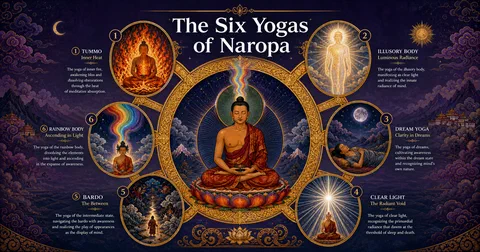
For the surrounding system, see the Six Yogas of Naropa. For the historical background and questions to ask before formal training, return to Gampopa’s dream yoga.
Use the map without turning it into a score
Pick one manageable observation: remembering a dream, identifying a moment of lucidity, or noticing an emotional reaction. Keep notes descriptive. You do not need to assign yourself a stage every morning, and there is no reliable deadline for moving through the whole framework.
For example, imagine a week with several ordinary dream fragments and one brief lucid moment. During that moment, you try to change the weather, become frustrated, and wake. The first-stage observation is that recognition occurred. The second-stage question is how you related to an appearance that did not obey you. The third-stage reflection might concern the urge to force an outcome. There is no need to claim anything about the fourth stage. One short entry can raise several useful questions without proving a level of attainment. Take the same inquiry into a small waking frustration: can you notice the demand that things go your way before acting on it?
If your routine disrupts rest, simplify it. If you want formal Kagyu milam instruction, take your questions and observations to a qualified teacher. Meanwhile, the short throat-center HowTo and a morning journal are enough material for a modest introductory routine.

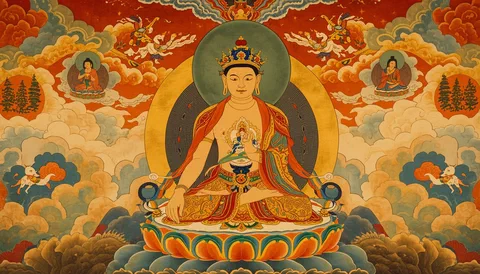 Gampopa's Dream Yoga: A Guide to the Kagyu Tradition
 Zhiné Meditation: A Tibetan Practice for Deep Focus and Lucid Dreaming
 Exploring Dream Yoga in the Bön Tradition
 How to Stop Nightmares (and What Lucidity Can & Can't Do)
 MILD Technique: Mnemonic Induction of Lucid Dreams
 Exploring the Bardo: What Lucid Dreams Reveal About Consciousness