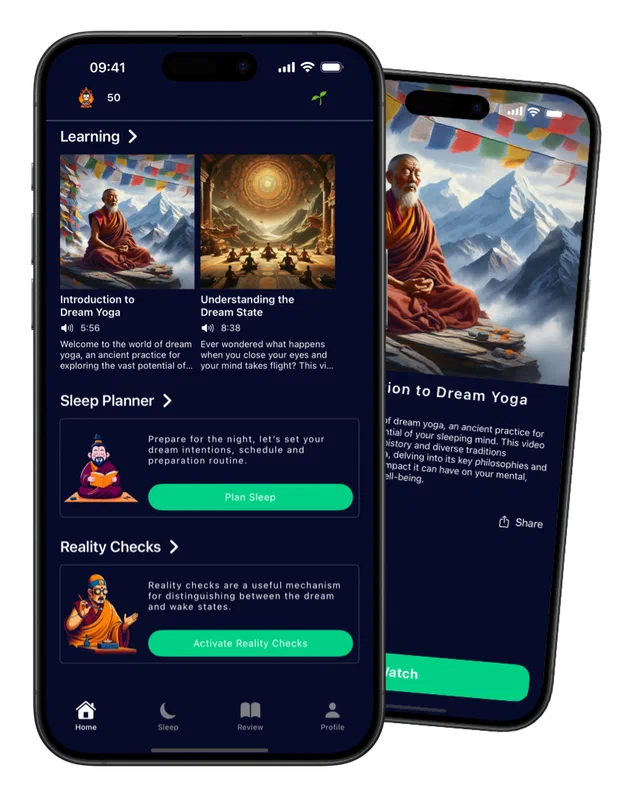
This is Chotrul Düchen — the Festival of Miracles — and if you have been waiting for the right moment to deepen your dream practice, this is it.
What Is Chotrul Düchen?
Chotrul Düchen (Tibetan: འཕྲུལ་འཁོར་དུས་ཆེན, pronounced Trül-khor Dü-chen) is one of the four great festivals in the Tibetan Buddhist calendar, commemorating the two weeks during which the historical Buddha, Shakyamuni, performed a series of miracles to defeat the challenges of six rival teachers and inspire the faith of countless beings.
According to traditional accounts, these miracles began on the first day of the first Tibetan lunar month — which corresponds to late winter or early spring in the Western calendar — and concluded on the fifteenth day, the full moon, when the Buddha’s miraculous displays reached their culmination.
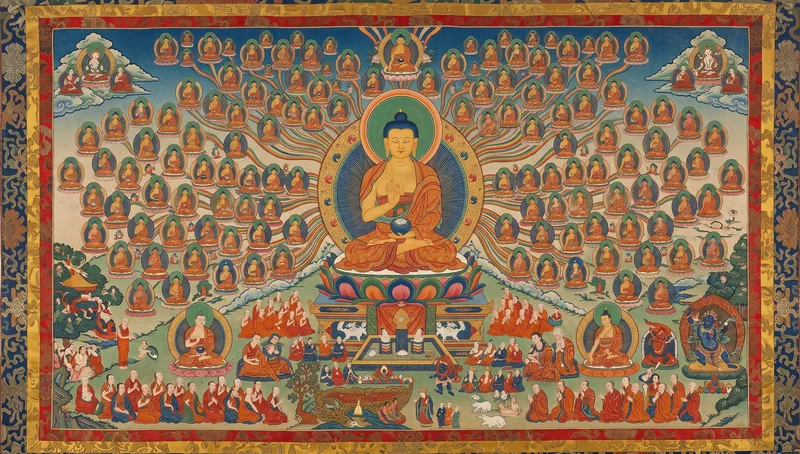
Each of the fifteen days is associated with a specific miraculous display. The final day — the full moon of the fifteenth — is considered the holiest, and throughout the Tibetan world it is marked by circumambulation of stupas, the making of torma offerings, and all-night practice sessions in monasteries and retreat centres.
Why Karma Multiplies During These Days
One of the most frequently cited teachings around Chotrul Düchen is the principle of merit multiplication. His Holiness the Dalai Lama and many other teachers have noted that positive and negative actions performed during the four great festivals carry amplified karmic weight — traditionally said to be multiplied ten million times (or in some texts, one hundred million times).
This teaching is not intended to generate superstitious anxiety. Rather, it is an invitation to extraordinary intentionality. If there is ever a time to:
- Increase generosity and make offerings
- Strengthen your ethical commitments
- Deepen your meditation practice
- Purify negative imprints through confession and dedication of merit
…it is during these fifteen days.
The Tibetan tradition teaches that during the four great festival days—including Chotrul Düchen—positive actions carry particular significance, and practitioners traditionally intensify offerings, practice, and ethical commitment during these windows. Some texts describe this amplification in very large terms (ten or one hundred million-fold), though the essential point is one of heightened intentionality rather than precise arithmetic.
— Attributed to FPMT teachings associated with Lama Zopa Rinpoche; paraphrased from traditional descriptions
The Bridge to Dream Yoga: Why These Nights Are Special
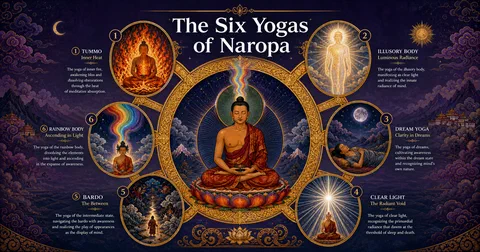
For practitioners of Tibetan Dream Yoga (Milam, one of the Six Yogas of Naropa), Chotrul Düchen is not simply a devotional occasion — it is one of the most potent windows of the year for working with the dream state.
Here is why.
1. The Boundary Between Waking and Dreaming Mirrors the Boundary Between Ordinary and Enlightened Mind
Dream Yoga teaches us that the dream state is not an escape from reality — it is a direct mirror of the mind’s nature. The bardo of dream, like all bardos, is a transition space: neither fully ordinary nor fully liberated. The fifteen days of Chotrul Düchen have long been understood as a similar liminal period — a time when the fabric of conditioned experience becomes more transparent, and the luminous ground beneath it becomes more accessible.
Practitioners who maintain awareness during these nights report unusually vivid, symbol-rich dreams, spontaneous lucidity, and on occasion, dreams that carry the unmistakable quality of terma — hidden teachings arising from the depths of mind.

2. Purification of Obscurations Opens the Dream Channel
Dream Yoga relies on what Tenzin Wangyal Rinpoche describes as the clarity of the subtle body channels (nadis) and the quality of prana flowing through them. Obscurations — habitual emotional patterns, unprocessed impressions, karmic residue — are precisely what cloud the dream channel and make dreams either unmemorable or unconscious.
The practices traditionally emphasised during Chotrul Düchen — confession, purification (such as Vajrasattva practice), generosity, and the accumulation of merit — are, from a yogic perspective, the very practices that clear those channels. This is not coincidence. The outer festival and inner practice point in the same direction.
Traditional dream-yoga teachers describe the relationship between purified channels and dream clarity: when the subtle body is clear, dreams become more vivid and the recognition of dreaming arises more easily. This is a common teaching in the tradition rather than a single verified quotation.
— Teaching attributed to Tenzin Wangyal Rinpoche, The Tibetan Yogas of Dream and Sleep (Snow Lion, 1998); paraphrased
3. The Full Moon as Gateway
The fifteenth day — the full moon — holds particular power for Dream Yoga practitioners. Across many traditions, the full moon is associated with heightened dream activity, and in Tibetan cosmology it corresponds to increased activity of the white bodhicitta (the white essence located at the crown chakra), which governs clarity, cognitive luminosity, and the quality of sleep and dream.
Many teachers recommend intensifying Dream Yoga practice on full moon nights throughout the year. The full moon of Chotrul Düchen combines this regular lunar intensification with the extraordinary merit field of the festival itself — making it arguably the single most powerful night of the year for dream practice.

How to Work With These 15 Days in Your Dream Practice
Whether you are new to Dream Yoga or have been practising for years, here is a framework for working with the Chotrul Düchen window with intentionality.
Days 1–5: Purification and Intention-Setting
Begin the festival by working with purification practices. If you have a Vajrasattva practice, this is the time to intensify it. If not, simple confession — genuinely acknowledging harmful actions of body, speech, and mind and resolving not to repeat them — combined with prostrations, works powerfully.
Set a clear dream practice intention each evening before sleep. Write it in a dream journal. Keep it simple: “Tonight I will recognise that I am dreaming.” Specificity and sincerity matter more than elaborate ritual.
Practical tip: Avoid alcohol, heavy food, and digital stimulation in the evenings during these fifteen days. These are the most common destroyers of dream clarity.
Days 6–10: Increasing the Dream Seed
The middle days are for working with what is sometimes called the dream seed — the intention, visualisation, or prayer that you plant in the mind before sleep to guide and ripen the dream state.
Traditional Dream Yoga seeds include:
- Mantra recitation: Reciting the mantra of Guru Rinpoche (OM AH HUM VAJRA GURU PADMA SIDDHI HUM) as you drift toward sleep, maintaining subtle awareness of the sound
- Visualisation at the throat chakra: A luminous Tibetan syllable AH, warm red-orange in colour, glowing at the throat — the chakra associated with the dream state
- Prayer to your lineage teachers to receive teaching in the dream
Record everything in your dream journal each morning, no matter how fragmentary. The act of recording trains the bridge of awareness between the two states.

Days 11–14: Recognition and Stability
If lucid dreams have begun arising, the work now is not to get excited (excitement collapses lucidity) but to stabilise. Classic Dream Yoga methods for stabilisation include:
- Looking at your hands in the dream and holding steady attention on them
- Spinning slowly in the dream to keep the visual field stable
- Repeating to yourself within the dream: “This is a dream. This mind is awareness.”
If you are not yet experiencing lucidity, do not be discouraged. The purification and merit accumulation of the festival is working at a level below ordinary awareness. Trust the practice and continue with sincerity.
Day 15 — The Full Moon: The Night of Nights
The full moon night of Chotrul Düchen calls for your most dedicated practice.
In the evening: Make offerings — butter lamps, water bowls, flowers, incense. Attend a puja if one is available in your community. Perform whatever devotional practice is at the centre of your path.
Before sleep: Practise the Nine Purification Breaths (alternating nostril breathing with visualisation of clearing the left, right, and central channels). Do a brief body scan to release tension. Set your dream intention with one-pointed sincerity.
During the night: If you wake naturally during the night (around 3–4am is traditionally considered most potent for dream practice), do not immediately check your phone. Lie still, let the dream imagery remain present, and gently re-enter sleep with your intention refreshed.
In the morning: Dedicate whatever merit has accumulated — from your waking practice, your dreams, and the fifteen days as a whole — to the liberation of all beings. This dedication is not a formality. It is the act that seals and multiplies everything that came before.
A well-known saying in the Dzogchen tradition—frequently associated with Chögyal Namkhai Norbu—reflects this perspective: dream and death are parallel states, and the ability to recognize one supports the ability to navigate the other. Whether expressed in exactly these words in a published primary source is not confirmed; the idea itself is broadly taught in dream-yoga lineages.
— Attributed to the tradition of Chögyal Namkhai Norbu Rinpoche, Dream Yoga and the Practice of Natural Light (Snow Lion, 1992); paraphrased
A Note on Sacredness Without Superstition
It would be easy to approach these fifteen days with either dismissiveness (“it’s just a cultural festival”) or superstitious anxiety (“I must not make a single negative action or my karma will be destroyed”). Both miss the point.
The Tibetan tradition is remarkably practical. The teaching on merit multiplication during Chotrul Düchen is not a threat. It is a description of opportunity — the same way a master gardener understands that certain days in the growing season are better than others for planting. You do not panic about the days you miss. You show up fully on the days that count.
For Dream Yoga practitioners, Chotrul Düchen is the optimal growing season for the luminous mind. Show up. Plant well. Trust the practice to ripen.
Join Us for Chotrul Düchen 2026
This year, we are marking these extraordinary fifteen days with a dedicated programme at Mindful Slumber — including guided Dream Yoga instruction, group practice sessions timed to the lunar calendar, and community support for your home practice throughout the festival window.
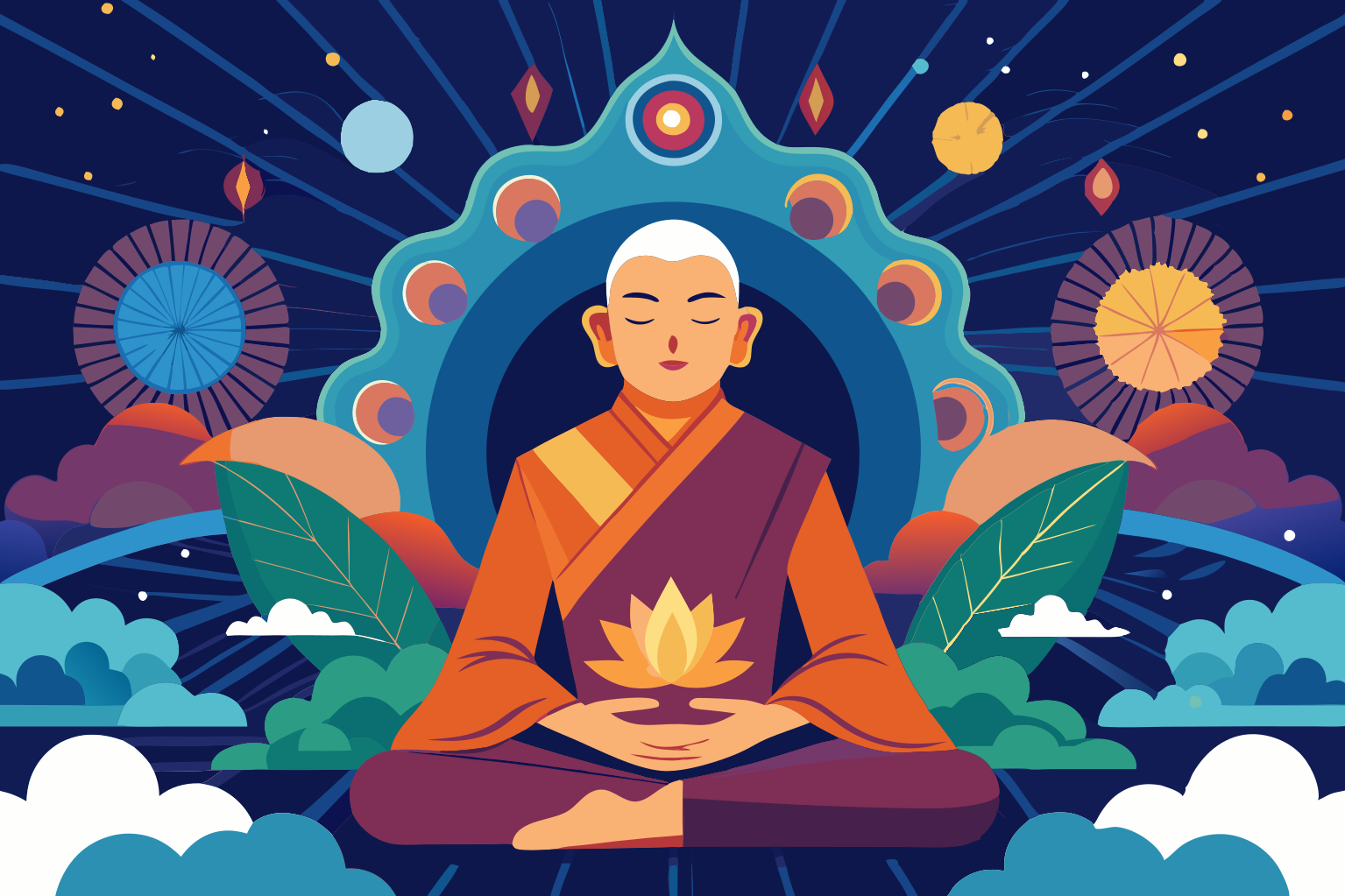
Whether you are just beginning to explore Dream Yoga or you are an experienced practitioner looking for a dedicated container for these sacred nights, we would love to share this time with you.
👉 Join us for Chotrul Düchen — Festival of Miracles 2026
Summary: What the 15 Days Offer the Dream Yogi
| Festival Phase | Days | Dream Yoga Focus |
|---|---|---|
| Purification | 1–5 | Clear the channels; set intention |
| Cultivation | 6–10 | Plant the dream seed nightly |
| Recognition | 11–14 | Stabilise lucidity; record all dreams |
| Full Moon Peak | 15 | All-night intensive; morning dedication |
May your dreams be luminous, your recognition be swift, and your practice benefit all beings without exception.
With metta and moonlight, The Mindful Slumber Team
 The Six Yogas of Naropa Explained: A Complete Guide
 Dream Yoga: What It Is, Benefits, and How to Practice
 About Us — Where Ancient Wisdom Meets Modern Sleep Science
 Reality Checks: 12 Tests That Trigger Lucidity